The Freedom to Jump In
If you could grab any superpower off the shelf, which one would you take?
Steven Winchell
11/26/20254 min read


If you could have any superpower, what would it be?
Everyone gets asked that question at some point. It’s a party trick, an icebreaker, a bit of fun. I use it for more than small talk. When I run trainings, I use the question to break people into groups. If I have time to dig in a bit more I do. That little choice opens a window into how someone sees the world. It’s not just “I want to fly.” It’s “I want to get away from things,” or “I want to see everything from above,” or “I want control.” The answers are tiny personality maps if you know how to read them.
When people pick flight, I don’t just see thrill-seekers. I see risk-takers and escape artists, people who want perspective and distance from the messy stuff. When someone picks invisibility, it can be about wanting space, privacy from a world that’s always watching. But it can also drift into sketchier territory. Some people like the idea of breaking rules without getting caught, sneaking around where they don’t belong, or spying on things that aren’t theirs to see. Sometimes it’s vulnerability, like feeling invisible already. Other times, it’s a straight-up red flag. Either way, the follow-up questions like why, when, and what would you do first, tell you the real story. Those answers are where the depth comes out. They reveal hopes, anxieties, humor, even past wounds, and they show me how someone imagines themselves moving through the world.
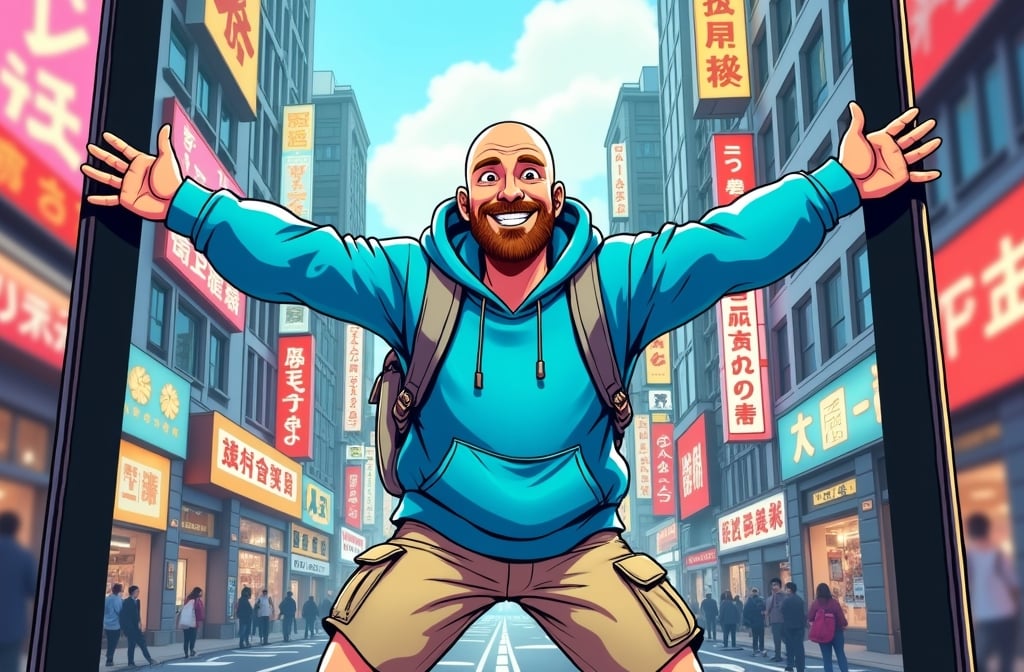
I could take a bunch of classic powers and be thrilled. Teleportation, telekinesis, super strength, sure, I’ll take them. But my head keeps going to something weirder and, honestly, more useful for the kind of person I am: the ability to step through any screen and into whatever world is on the other side. It could be a sitcom, the newest blockbuster, a video game, a live news feed, or even Google Street View, fictional or real. The implications are endless.
First, the justice angle. We’ve all wanted to jump into a livestream of some public figure saying something vile and either shut them down or expose them in real time. The catharsis is obvious. I’m not making a manifesto about violence, but sometimes the idea of walking onto a live stage and telling someone exactly how harmful their words are is deeply satisfying. And I get to choose whether the feed I jump into is the real, live event—with real consequences, or a fictional version of that same moment where anything I do has no real-world fallout. So, if I ever wanted to punch the president in a fit of righteous anger, I could step into a staged version and let it out without getting arrested.
Second, and even more important to me, is the exploration side. Imagine walking into Cheers and knocking back a beer while Sam flirts and Norm grumbles. Picture stepping into Boy Meets World and getting a life lesson straight from Mr. Feeny. Or drop into Jurassic Park, hearing the ground shake as a T-Rex barrels past, and experiencing the thrill and terror of that world firsthand instead of just watching it on a screen. That isn’t just fan service. It’s a way to live out tiny private dreams, to try on courage, rehearse difficult conversations, witness a favorite character’s best or worst moments and say the line you always wanted to say. It’s role-play elevated to reality. You can be braver, kinder, crueler, or simply goofier than you ever could in real life and learn something from it.
There’s a therapeutic angle too. People rehearse scenes in therapy all the time, thinking about what they’d say to a significant other or how they’d handle a difficult situation, but this lets you actually step into the moment. You could practice assertiveness by confronting a challenge or practice empathy by seeing the world through someone else’s eyes inside a story. You could also revisit moments from your own life, relive them, reflect on them, and even say the things you wish you had said at the time. For creatives, it’s research on steroids. For the lonely, it’s company. For the curious, it’s a whole library of lived experiences.
And travel. Don’t forget travel. Street View becomes a portal. Want to sip coffee in Rome at noon and be back before dinner? Open the map, jump through, wander, take in the sounds and smells, and come home with new stories. No airport security, no planning panic. That immediacy turns adventure from an expensive, organized ordeal into a grab-bag of spontaneous experiences.
The nuance I love most about this power is the freedom of choice. Every jump comes with decisions: where to go, who to interact with, and what kind of impact to make. I could step into a fictional world just to explore and play, or into a real-life scenario knowing my actions carry weight. I could act boldly or simply observe. That freedom turns every moment into an experiment, a chance to test myself, satisfy curiosity, or even just indulge in harmless mischief. The real power isn’t just moving through worlds; it’s deciding how to move through them.
Call it petty, call it childish, call it a little wicked if you want. This power would let me push limits without paying the real-world price, live out fantasies on my own terms, and dive into other lives and worlds like a relentless explorer. You get moments of justice, but you also get the rush of play, the chance to practice skills, a taste of mischief, and the thrill of being completely untethered for a while.
If the world handed me that power, I’d use it for laughs, for learning, and for a little righteous chaos. And sure, maybe sometimes I’d get a kick out of seeing the look on someone’s face when I step through their screen and call them out. But the real draw is simpler: to dive into a story I love and experience what it feels like to live in someone else’s world, even if it’s just for an hour.